


An introvert's guide to sober socialising

Let me create an imaginary scene for you (and a real one in my case). It's the weekend, your friends are heading to the pub, and even though you want to go down there to spend time with them, you actually genuinely want to hang out with them. The thought of standing in a loud, crowded bar with nothing in your hand but a Diet Coke and lime while everyone else is chatty around you feels, at best, exhausting. At worst, it feels like performing a version of yourself you don't quite recognise.
That's been me, more times than I can count.
I'm an introvert, and I don't drink, not in a dramatic, story-of-recovery way, just in a this doesn't work for me way. And for a long time, those two things together made socialising feel like a jigsaw puzzle I couldn't piece together. Pubs were the default, and I didn't have a convincing alternative. Until I found the one, quite accidentally, and no, not in an apple-falling-on-Newton 's-head kind of way. Just a poster. On a wall. At university.
This is what I now call a Crafternoon, though I can't take credit for the word. I first spotted it on a society poster advertising an arts-and-crafts session, the word sitting there in bold, and something about it just clicked, and I had my “Yeah, this is it!” moment. An activity-led hangout where the craft leads to the conversation. No one is standing awkwardly, wondering what to say next, because everyone is focused on something.
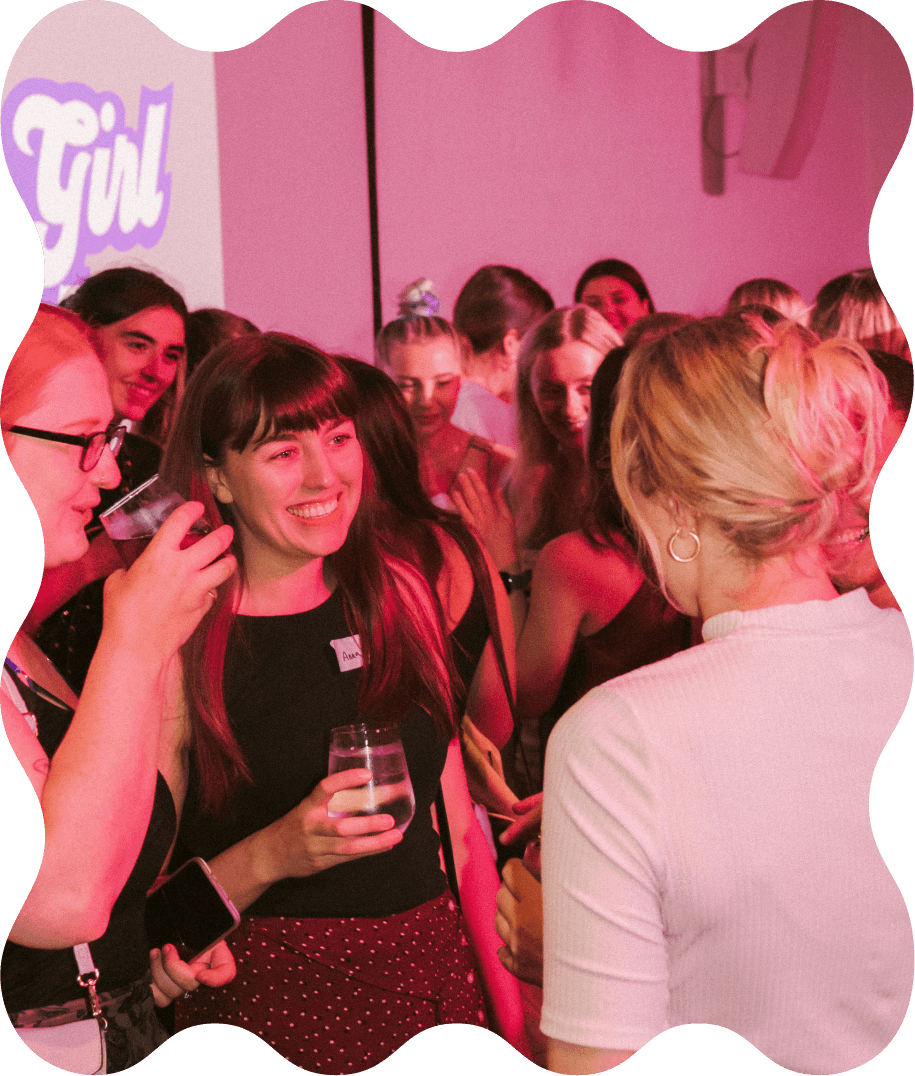
At university, I started gravitating towards societies built around things I actually cared about. A Taylor Swift society. A magazine club, A feminist society, and of course, a writing club! Something about creative spaces full of people who showed up because they loved the same music, same aesthetics or had the same hobbies and a slightly similar niche corner of the world that I did, made me feel excited to socialise and get out of my comfort zone. And what I realised, almost immediately, was that it was not all that difficult to socialise; it was rather easy to talk to people in such settings. Not because I'd suddenly become extroverted. But because we had something to do in common. The more I went to such hangouts, the more I fell in love with it, as the pressure of performing socially faded away, and what was left was just people
Before this, I had convinced myself that I would always be the odd one out, with no drinks in my hand, while convincing myself to go out to clubs and then eventually be the least fun person in the room, but now that I look back, I am glad.
Why busy hands are the best social tool you have
There's something almost meditative about making something with your hands. When you're threading beads onto a bracelet or cutting out shapes for a greeting card, your nervous system actually settles.
For those of us who are sober and socially anxious, this is genuinely transformative. So much of what alcohol does in social settings, loosening the shoulders, quieting the inner monologue, a craft session does too, without the negative consequences. The usual triggers, awkward eye contacts and silences that go on too long, are all softened when you are occupied. The activity gives you a reason to look down and focus, without any small talk that feels nerve-wracking. And when conversation does happen, it tends to be better. More natural. Less performed. You're present for all of it, which is something a drink rarely allows. And you obviously do not have to yell over your limit for the other person to hear you, because there's no loud music over you.
I noticed this properly at a Swift society bracelet-making session. We were all stringing letters onto elastic, swapping beads, debating which lyrics deserved to be immortalised in friendship bracelet form, and I'd had three genuinely good conversations before I even registered that I was socialising. No drink in hand. Just good people, good music, and something to make. That's the magic of it all.
How to host your own Crafternoon
You don't need a society or a formal setup. You just need a few people, a table, and a quick run to WHSmith to get all the stationery you would possibly need to make something. Here's how to do it well:
Keep the group small
More people replicate the pub problem, lots of surface-level chatter and nowhere to actually land.
Choose an activity with a low skill floor
The point isn't to impress anyone. Bracelet-making, greeting card DIYs, collaging, painting plant pots, vision-board making, anything where a beginner (like me) and someone who's been doing it for years can sit at the same table without it being awkward.
Build it around a shared interest
The theme is what draws the right people in. A Taylor Swift bracelet session pulls in Swifties. A magazine collage afternoon pulls in people who care about aesthetics and visual culture. When everyone at the table already has something in common before
they arrive, the conversation has somewhere to go. Unlike with pubs, where even though socialising is less and drinking is more, being the only sober person in the room makes me feel more at unease.
Make it cosy
Snacks matter more than you think. Yes, grab those M&S sweet treats that you have been eyeing for a while and share them with everyone! And also, a scented candle that signals the season, along with a good playlist, will help create an environment that feels safe and low-stakes and will make your nervous system feel at ease. You're just creating an environment where people can just exist together comfortably.
Let the conversation be uneven
Some people will talk a lot. Some will barely say anything and just enjoy the company. Both are fine. That's actually the beauty of activity-led socialising, it is not your responsibility to fill every silence.
The societies that changed how I saw socialising
At university, the societies that genuinely helped me were creative spaces built around shared taste, and they weren't designed as mental health interventions. They were just people who liked the same things, making space to be together. But the effect was the same. Just as people who like going to pub crawls/otley runs together.
What made them different from a night out wasn't just the absence of alcohol. It was the presence of a shared purpose. Everyone was there for a reason that had nothing to do with being seen or performing fun. And that, for an introvert who finds crowded bars overwhelming, changed everything.
And like Taylor Swift said, “If I had one hope for you, I would say that I hope that you get to nurture your hobby and your passion just between you and that craft.”
The best social experiences I've had sober haven't looked anything like a night out. They've looked like an afternoon at a table covered in beads and scissors and half-finished things, with good music on and nowhere else I'd rather be!
Written by Rithu Athreya
Rithu is a freelance writer and recent International Journalism graduate from the University of Leeds. With a background in academic research focused on women’s health and wellness.